


250 Years of American Enterprise
The most revealing measure of U.S. competitive power isn’t found in military operations against Iran or a looming $1.5 trillion defense budget. It’s in our private economy.
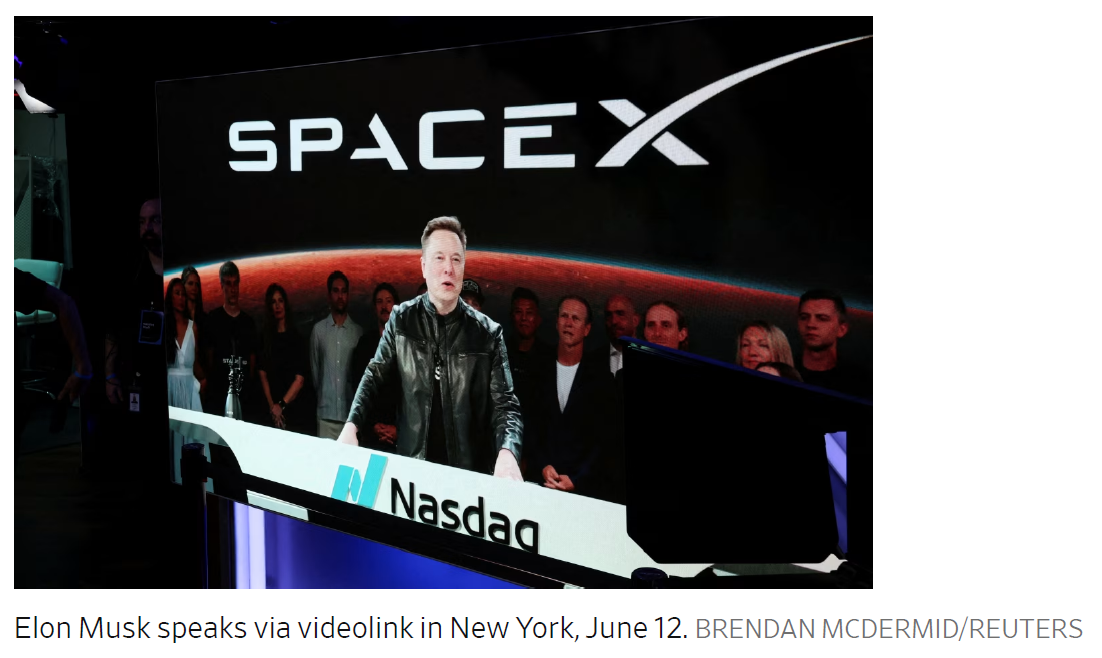
SpaceX closed with a market cap larger than the gross domestic product of most nations on June 12, its first day of public trading. In the prior two weeks, Anthropic and OpenAI filed to go public, both chasing $1 trillion valuations.
These aren’t the closed deals of an insider class. SpaceX set aside nearly a third of its offering for retail buyers, and millions of Americans now own a sliver of it through index funds and 401(k)s. The spoils of the most dynamic companies on earth are spread among school teachers and retirees.
Nothing like this is happening in Europe or China. The U.S. drew about 64% of all venture capital worldwide in 2025, up from roughly 47% a few years earlier, and captured about 85% of global funding for AI.
Almost 80 countries run space programs, yet a single U.S. company, SpaceX, flies more than 10,000 satellites, about two-thirds of everything active in orbit. AI commands the ambition of governments on every continent, but the firms setting its pace are almost all American. In both arenas, the breakthroughs come not from a state ministry but from the inventiveness of private enterprise.
The gap between the U.S. and others is widening, not closing. In the 2024 European Union report on European competitiveness from Mario Draghi ,the former central banker noted that not a single European company worth more than 100 billion euros had been built from scratch in the past 50 years. Of America’s dozen or so trillion-dollar companies, half were built during that exact span.
In the past 250 years, a nation once so fragile that it might have been strangled in its cradle has risen above all its major competitors and established itself as the world’s pre-eminent power. How a republic not built around martial genius or government planning did that is the central question of American strategy. The answer is the spirit of enterprise: free markets and free people.
Unlike other great powers, America’s strategic power has been rooted, from the beginning, in the dynamism of a society more commercial than governmental, more private than public, and more civilian than military, even in war. The U.S. advantage wasn’t in the White House, the State Department, or the Pentagon. It lives in a nation of joiners and problem-solvers who band together rather than wait for direction from the state.
When Alexander Hamilton praised the “unequaled spirit of enterprise,” he was describing a country that fielded more than 4,000 merchant ships and not a single Navy warship. The first American most foreigners met was a merchant or a missionary, not a Marine. The flag would follow trade if it followed at all.
For most of the 19th century, while America grew into the world’s largest economy, its Navy ranked no better than 10th, and its Army was an afterthought. That wasn’t a weakness. It was a civic design.
Even our wars proved the rule. America’s decisive contribution to victory in World War II wasn’t blood but industry. The U.S. sustained a small share of Allied casualties yet supplied more than half of Allied war material, the “arsenal of democracy” that Franklin Delano Roosevelt named and U.S. factories built. We out-produced our rivals before we out-fought them.
This advantage is valuable, rare and difficult to imitate. Authoritarian rivals can build militaries. What they can’t do is permit a society to invent, associate, fail and try again without asking permission, a society that runs less like a symphony than like a jazz band, with no conductor and no score. China can build a competitive navy; it can’t build Silicon Valley.
The lesson applies equally to America’s friends. Free nations can’t keep pace with this superpower when their governments sit heavily on economic life. Since 2008, when the U.S. and eurozone economies were roughly equal, the U.S. has grown about five times faster and is now nearly 70% larger. The difference isn’t luck or scale. It’s the residue of design.
Ronald Reagan, in his first inaugural address, named the secret of American power: “We are a nation that has a government, not the other way around. And this makes us special among the nations of the Earth.” On the republic’s 250th birthday, that is worth celebrating: not the government that governs us, but the restless, inventive, association-forming energy of the American people themselves.